- Call us: +91 98413 77070
- connect@venonto.com

Smart Hydroponic Farming in India: How IoT and Data Are Changing What Grows on Rooftops
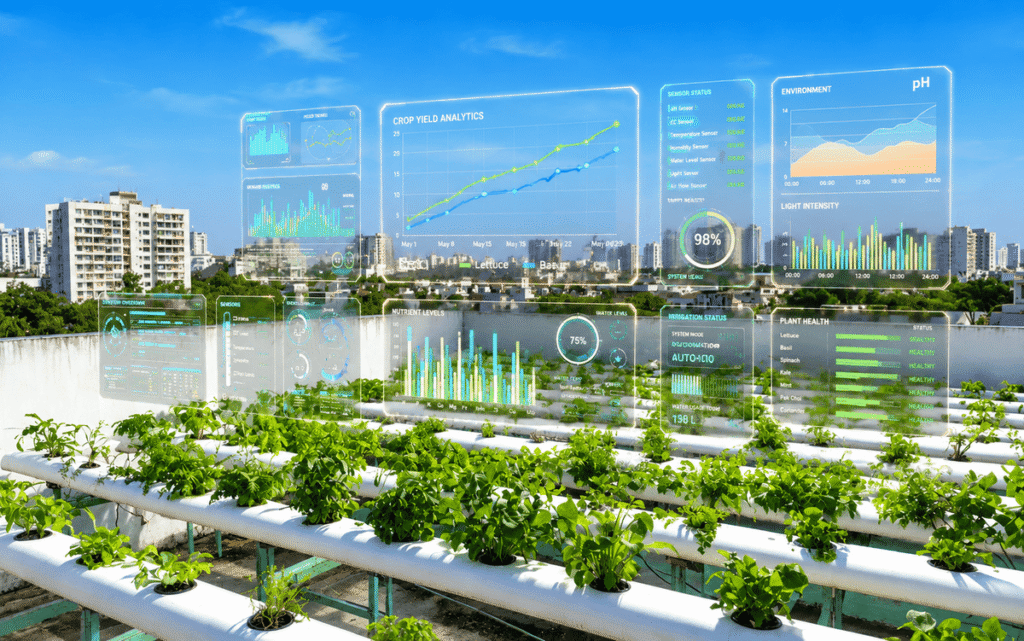
Let me tell you about the thing that actually kills most hydroponic farms. It is not the seeds. It is not the nutrient solution. It is not even the system design.
It is the fact that something shifts at 2am — a pH drift, a pump that underperformed, a temperature spike in the root zone and by the time the grower notices, the damage is done and the crop cycle is compromised.
Bear with me. This is going to start with water and end with data, and somewhere in the middle you are going to look at urban farming completely differently.
Hydroponic farming is not hard. Managing it manually is.
Here is a thing most people do not think about when they start a hydroponic setup.
Plants are forgiving up to a point, and then they are not. Nutrient concentration, pH, temperature, humidity, light exposure, every one of these variables is in constant motion.
They shift as plants feed, as water evaporates, as the sun moves across a rooftop. Managing them manually means checking in regularly, adjusting by instinct, and hoping nothing drifts too far between visits.
That is fine for a pot of basil on a kitchen windowsill.
It is a problem when you are running a serious setup and the margin for error determines whether you have a productive harvest or three weeks of wasted input costs.
This is precisely the gap that IoT and data analytics were built to close. Not to replace the grower’s judgment. To make it sharper.
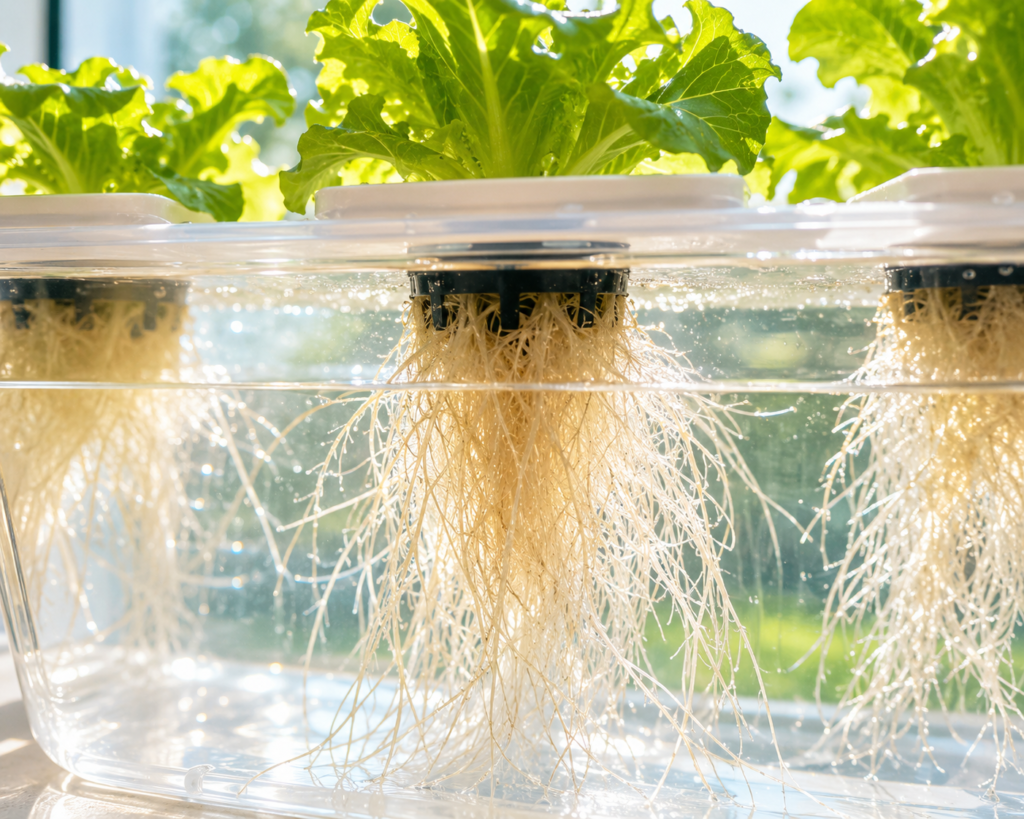
So what is IoT actually doing inside a hydroponic farm?
Forget the buzzword for a moment.
In a hydroponic context, IoT is a network of sensors that continuously measure everything your crops need to thrive, and stream that data to a dashboard you can read from anywhere. Here is what is actually being tracked and why each one matters.
Nutrient concentration is the first variable sensors monitor. Plants need dissolved nutrients in the water at exactly the right ratio for each growth stage.
Too little and development stalls. Too much and you trigger toxicity.
The difference between the two can be invisible to the eye and devastating to yield.
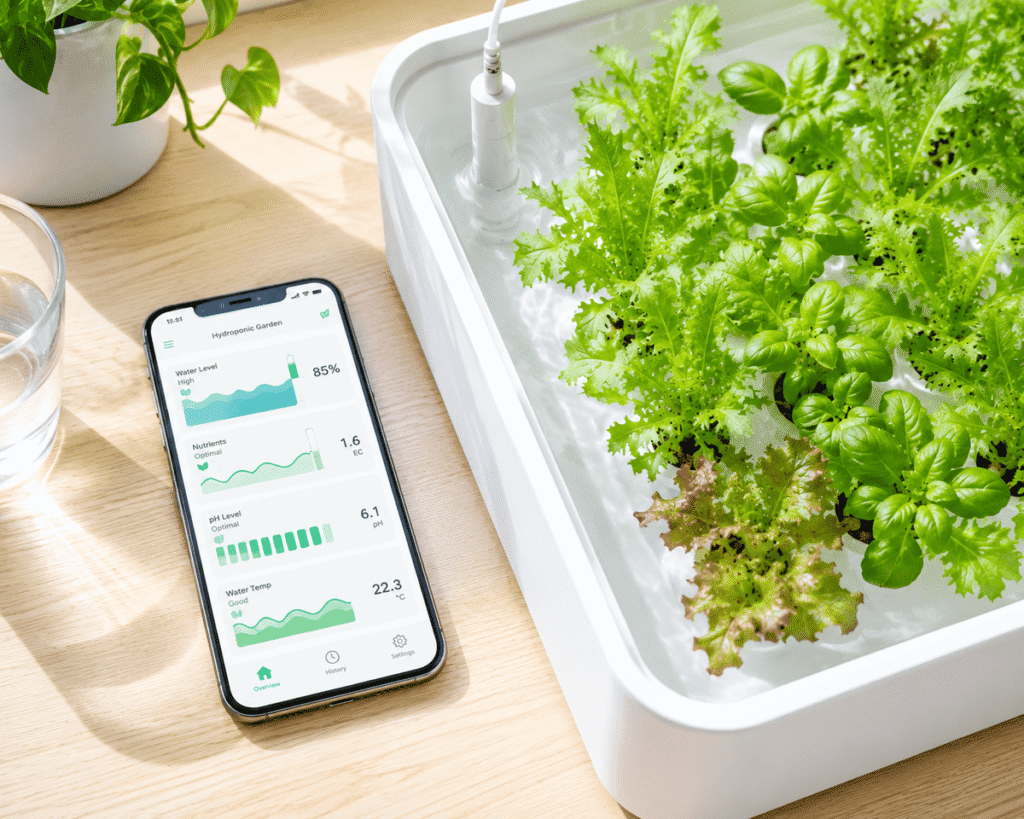
A sensor catches it in real time. A manual check catches it when the leaves start yellowing, which is a different conversation entirely.
pH and electrical conductivity sit just beneath nutrient concentration in importance. pH governs whether plants can actually absorb the nutrients present in the solution.
Electrical conductivity measures the overall solution strength.
Both drift throughout the day as plants feed and water evaporates. Both require regular adjustment to stay within their optimal window.
Temperature and humidity operate at two levels simultaneously, the air around the leaves and the root zone beneath the surface.
A spike in the root zone that would be invisible to any casual inspection can trigger stress responses that cut yield significantly. This is the kind of problem that manual monitoring almost never catches early enough to address.
Light intensity is the final piece. Photosynthesis is the engine of plant growth, and smart LED systems adjusted by light sensors ensure crops receive the right spectrum and duration regardless of how natural light changes through the day and across seasons.
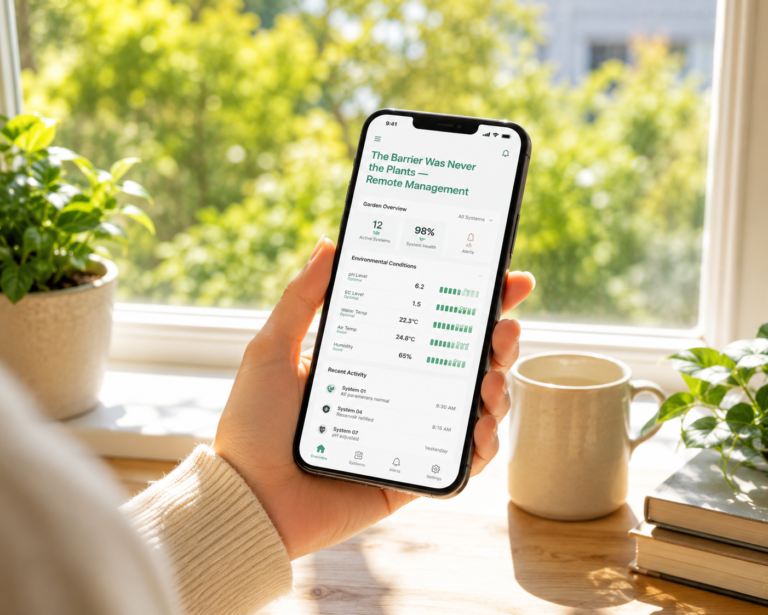
All of this data streams to a mobile app or cloud dashboard continuously.
A grower in Hyderabad can check the pH of an installation at a client’s office building at 11pm, see that a nutrient pump has underperformed, and adjust the dosing schedule remotely before a single plant is affected.
The monitoring is continuous. The physical presence does not have to be.
Raw data is just data. What you do with it is the competitive edge.
Modern hydroponic systems accumulate detailed records across every growing cycle.
The farms that put those records to work can do things that would have been impossible five years ago.
Trend analysis lets growers understand how specific crops perform across different seasons or microclimates on the same rooftop.
Not a guess. An evidence-based pattern across multiple cycles.
Predictive alerts flag early warning signs of nutrient deficiency or disease before any visible damage, often giving a 24 to 48 hour window to intervene, which in farming is an enormous advantage.
Yield forecasting lets commercial operators commit to delivery timelines with confidence rather than estimation.
Resource optimisation is where the financial case becomes undeniable. Knowing exactly how much water, nutrients, and energy each crop type consumes per cycle allows a grower to calculate the true cost per kilogram and make informed decisions about which crops are commercially worth prioritising.
None of this requires a data science background.
The analytics layer in modern hydroponic platforms is built to surface answers in plain language, which growing cycle performed best, where the variance came from, and what to change in the next round.
The barrier was never the plants. It was the assumption that farming needs constant presence
Wi-Fi connected controllers and cloud dashboards now allow growers to adjust pump schedules, modify nutrient dosing, change lighting cycles, and monitor system health entirely from a smartphone.
Maintenance routines run automatically.
Alerts arrive the moment a parameter drifts. Multiple installations across different locations can be managed from a single interface.
This matters because the people most likely to invest seriously in urban hydroponic farming are not people with unlimited free time.
They are working professionals, institutional facility managers, and small commercial operators who need reliable output without the overhead of treating the farm as a second full-time job.
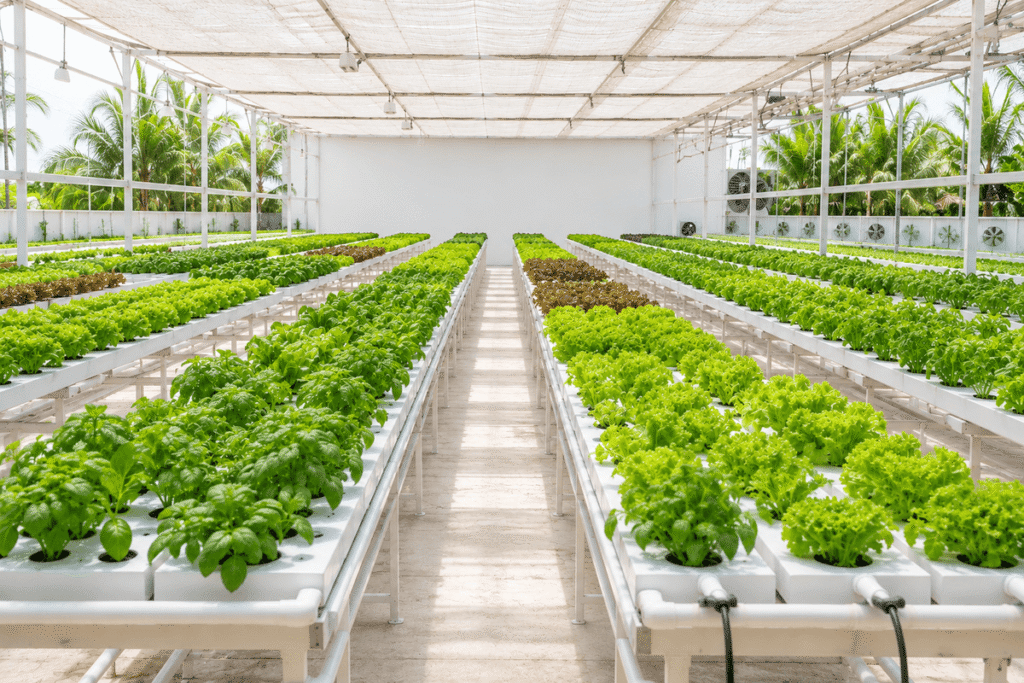
In May 2025, Punjab Agricultural University signed a formal MoU with BITS-Pilani to build collaborative research across precision agriculture, IoT, data analytics, and geospatial science, a clear institutional signal that data-driven farming is entering mainstream agricultural practice in India.
The findings from that work are already shaping how serious commercial hydroponic operators think about monitoring infrastructure. This is not fringe experimentation. It is entering mainstream agricultural practice.
Why this matters for Indian cities specifically
India’s urban population is projected to cross 50 percent by 2047.
The food systems serving those cities were not built for that reality, and the gap between what conventional supply chains can deliver and what a growing urban population needs is widening every year.
Data-driven urban farming addresses that gap in ways that go beyond the headline numbers.
It reduces dependence on rural supply chains that lose produce to heat and handling before it reaches a market. It brings production closer to consumption, cutting transport emissions and price volatility simultaneously.
It creates skilled urban employment in installation, maintenance, and farm management. And because hydroponic systems do not require pesticides or herbicides, the food they produce is meaningfully cleaner than a significant portion of what reaches city markets through conventional channels.
Most importantly, it is resilient in a way that soil-dependent agriculture cannot be. Climate variability, drought, and seasonal disruption do not stop a well-managed indoor hydroponic farm. The farm does not care about the monsoon arriving two weeks late.
Where this is heading
The integration of IoT and data analytics into hydroponic farming is not a trend that will peak and plateau. The technology is getting more affordable. The data models are getting smarter. And the case for urban food production in India is only becoming more urgent.
What is changing most fundamentally is the relationship between the farmer and the crop. For most of agricultural history, growing food required physical proximity, manual observation, and experience built over years of trial and error.
Precision farming does not eliminate that knowledge. It amplifies it, giving growers more information faster, with less margin for the kind of error that comes from checking once a day and hoping for the best.
Every hydroponic setup has a growing tray. Not every hydroponic setup has the data to know what is actually happening inside it.
That gap is exactly where the next generation of urban farming gets built.
Venonto designs, installs, and supports hydroponic and terrace farming systems for homes, businesses, and institutions across Hyderabad. Every setup is built around your space, your goals, and the crops that make most sense for your context. Let’s talk!

At Venonto, we design, install, and maintain modern urban farms with hydroponic and terrace gardens for homes and businesses. Our customized setups use food-safe materials, smart irrigation, and low-water methods to grow healthy produce with minimal environmental impact. We’re on a mission to make fresh, home-grown food practical in every Indian city.
Let’s Grow Together
Registered Office
Venonto Private Limited.
#204, 17-98/12, Sri Sai Nivas, Kamalanagar, Dilsukhnagar, Hyderabad – 500060, Telangana, India.
Phone: +91 8976402918
Email: connect@venonto.com
CIN No: U51909TG2021PTC154670
© 2026 Venonto. All Rights Reserved.