- +91 9841377070
- connect@venonto.com

Thinking About RAS Fish Farming? Check These 5 Things First
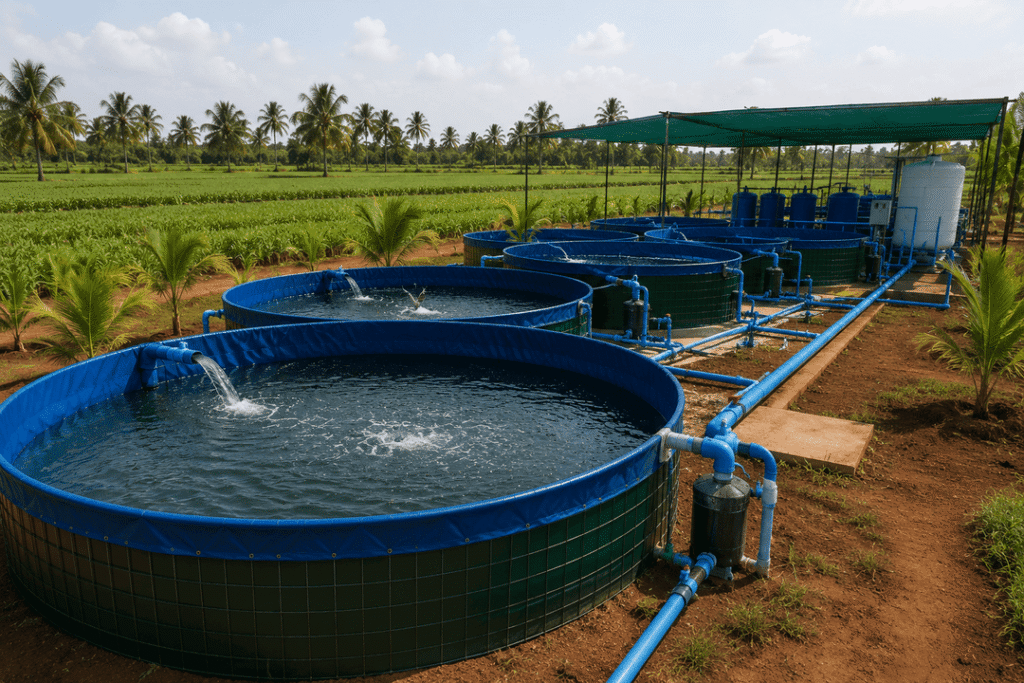
“Can I set up a RAS system on my land?” That’s one of the first questions people ask us when they call Venonto, and it’s exactly why we put together this RAS fish farming checklist.
It’s an understandable question, but it’s rarely the one that decides whether a project succeeds.
Over the years, we’ve realised that a successful RAS project isn’t decided by the tanks you buy or the technology you choose.
It comes down to something simpler:
is your land suitable,
is your water reliable,
is there a market nearby, and
can you manage the day-to-day operation.
These are the questions we discuss before we even start talking about equipment.
We’ve visited sites where people had already invested in tanks, pumps, and filtration units before discovering a basic problem that could have been caught during planning i.e poor drainage, unreliable electricity, or simply no local demand for the species they wanted to grow.
Most of those problems aren’t expensive to identify. They’re expensive to ignore.
Before you invest in a RAS project, these are the five things worth checking first.
What Exactly Is a RAS System?
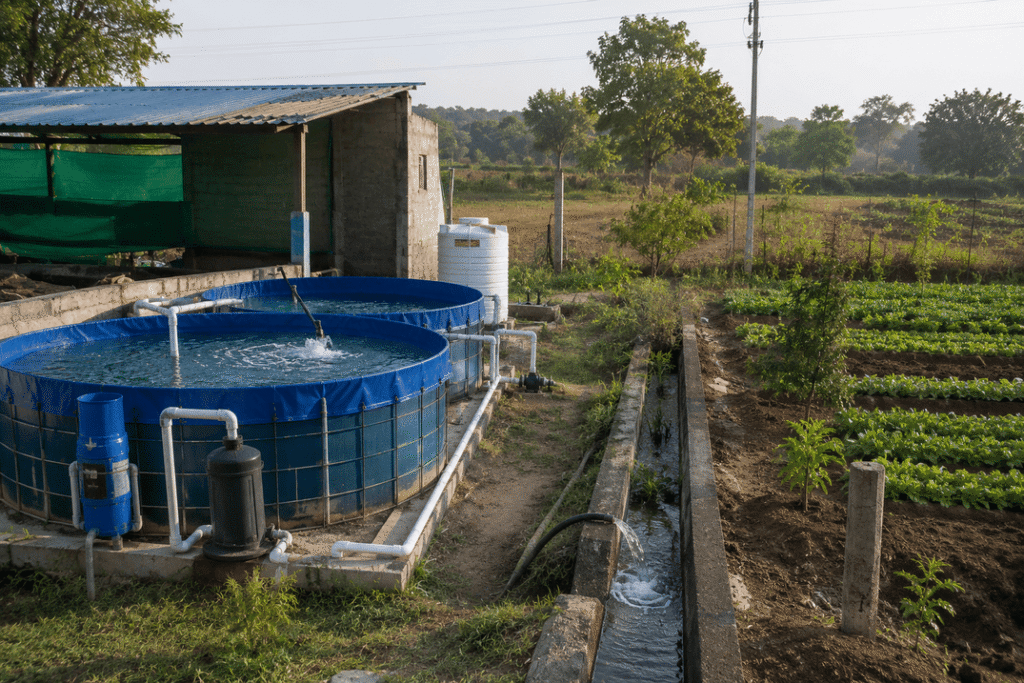
If you’re new to fish farming, here’s the simplest way to think about it. Instead of growing fish in a pond where water is continuously replaced, a RAS setup cleans and recirculates the same water through a series of filters.
That means you can produce fish using far less water while keeping much tighter control over the growing environment.
The system runs on mechanical filtration, biological filtration, aeration, and continuous circulation working together — which also means when one part fails, the others feel it too.
That’s why planning matters as much as the equipment itself.
1. Start with the Land
Whenever someone asks whether their land is suitable for RAS, we ask one thing back: do you own it? Not leased. Not “in the process of buying.” Owned.
Land ownership is only the first step. The land itself should also be practical for construction and daily operations. Flat or gently sloping agricultural land is generally easier to develop than uneven terrain, as it reduces site preparation costs and simplifies the installation of tanks, pipelines, and drainage systems.
It’s also worth checking whether the site has good road access. Fish feed, equipment, oxygen cylinders, and harvested fish all need to move in and out of the farm regularly. A location that’s difficult to access can increase operating costs over time.
This is where many projects quietly slow down before they even begin. Government subsidy schemes, bank loans, and long-term planning all get considerably easier when ownership is clear and considerably harder when it isn’t.
Before you think about tanks or fish species, get the land itself sorted. It’s the foundation everything else sits on.
2. Water Is Important. Reliable Water Is Better.
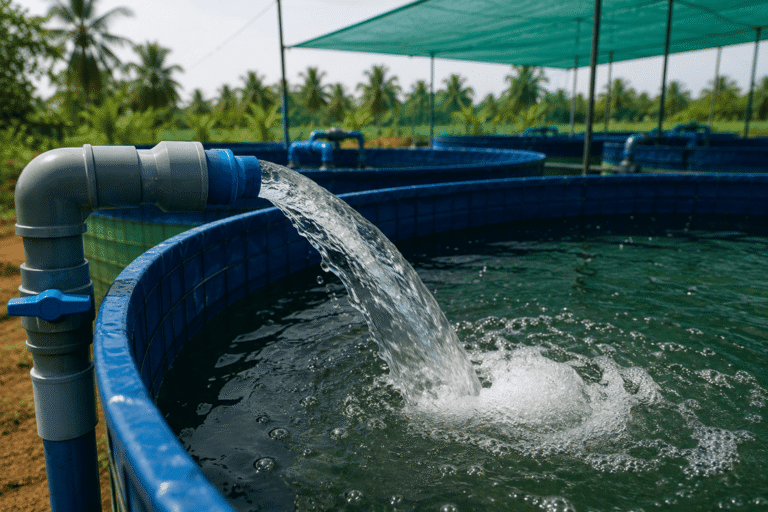
Many people tell us they have a borewell and assume that settles the water question. It’s a good start, but it isn’t the whole answer.
During our site visits, we don’t simply ask whether a borewell exists. We want to understand whether it can reliably support the farm throughout the year, especially during summer when groundwater levels often drop. A reliable water source is one of the foundations of a successful RAS project.
Water quality matters just as much as water availability. Before investing in a RAS system, it’s worth getting your water tested for basic parameters such as pH, hardness, alkalinity, iron content, ammonia, and salinity. Most water quality issues can be treated, but identifying them early helps you choose the right filtration system and avoid unnecessary costs later.
A RAS system also depends on a continuous supply of electricity. Pumps, aerators, filters, and oxygen systems operate around the clock, and even a short power interruption without proper backup can affect water quality and put the fish under stress.
When we evaluate a site, we look at these three factors together, not separately:
- Borewell reliability: Does it provide sufficient water throughout the year, especially during summer?
- Electricity supply: Is there a dependable 24-hour power connection?
- Backup power: Is there a generator or alternative power source in case of an outage?
A dependable borewell without dependable electricity is still a risk. Both need to work together for a RAS system to operate reliably.
3. Where Will the Wastewater Go?
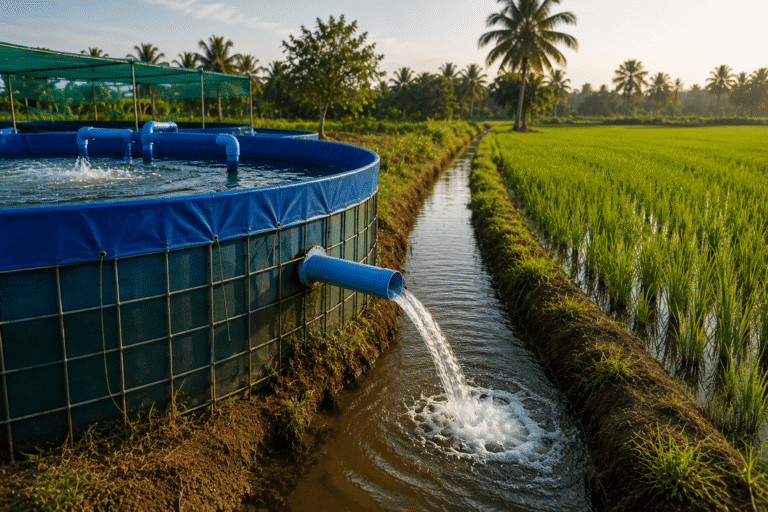
This is one of the most overlooked aspects of planning a RAS fish farming project, yet it can have a significant impact on whether a site is suitable.
Although a Recirculating Aquaculture System (RAS) reuses around 95–99% of its water, a small quantity still needs to be discharged during routine operations. This wastewater comes primarily from filter cleaning, sludge removal, and periodic water exchange, so it’s important to plan where it will go before construction begins.
We’ve visited sites with reliable borewells, good road access, and ample space for tanks, but no practical way to handle wastewater. In many cases, this became a major challenge that required redesigning the project or exploring additional infrastructure.
As a general guideline, having around half an acre of cultivable land available for wastewater discharge is a good benchmark. Larger agricultural plots are even more beneficial because the nutrient-rich water can often be reused for irrigation instead of being treated as waste.
The water discharged from a RAS system is very different from untreated sewage. It typically contains nutrients from fish waste and uneaten feed, which can be valuable for crops when managed correctly. Reusing this water for agriculture can improve water efficiency and support more sustainable farming practices.
However, wastewater should always be managed responsibly. It should not be discharged directly into public drains, lakes, rivers, or other natural water bodies without complying with local environmental regulations and disposal guidelines.
Planning wastewater management early helps avoid costly changes later and ensures the farm can operate efficiently from day one.
4. Know Your Market Before You Choose Your Fish
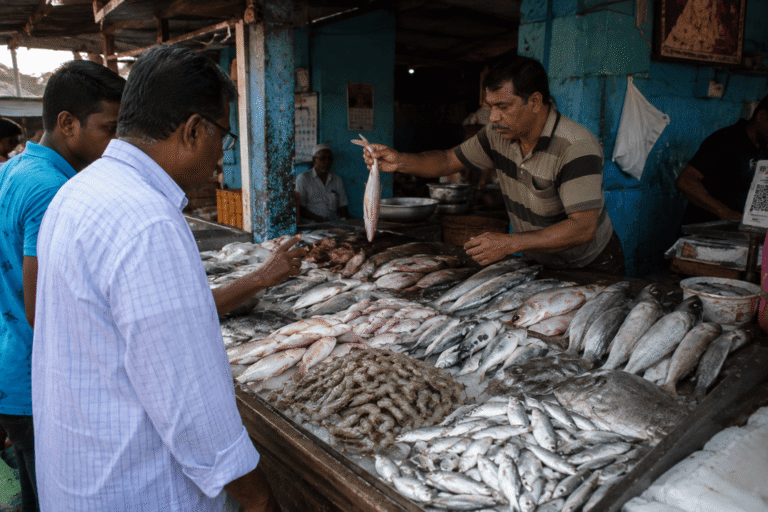
One mistake we see quite often is people choosing a fish species first and then trying to find buyers later. In most cases, it’s better to work the other way around.
Before deciding what to culture, spend some time understanding your local market.
- Visit nearby fish markets, talk to wholesalers, retailers, restaurants, and traders, and find out which species have consistent demand.
- Ask how prices fluctuate throughout the year, whether demand changes seasonally, and who the regular buyers are. These conversations often provide more practical insights than online videos or social media trends.
When planning a commercial RAS fish farming project, market demand should influence your choice of species just as much as growth rates or production potential. A species with slightly lower profit margins but steady local demand is often a safer and more sustainable choice than one that promises high returns but has a limited or uncertain market.
The same principle applies to shrimp and prawns. While they can offer attractive returns, they also require tighter control over water quality, salinity, biosecurity, and day-to-day farm management. For someone entering aquaculture for the first time, starting with fish and gaining operational experience is often the more practical approach before moving on to more management-intensive species.
Ultimately, successful fish farming isn’t just about producing healthy fish—it’s about producing fish that you can sell consistently and profitably. Understanding your market before you invest is one of the best ways to reduce risk and build a sustainable business.
5. Plan Your Funding Before You Build
One mistake we occasionally see is people finalising construction plans before understanding how they’ll finance the project.
Building a Recirculating Aquaculture System (RAS) is a significant investment, and whether you’re using your own funds, a bank loan, or a combination of both can influence how the project should be planned from the beginning.
If you’re planning to apply for a government subsidy or loan, explore your funding options before construction begins. Many schemes require project approvals, inspections, DPRs (Detailed Project Reports), or supporting documentation before work starts. Missing these requirements could affect your eligibility.
Before you approach a bank, make sure you understand:
- Your estimated project cost
- Whether you qualify for a government subsidy
- The documents required for loan processing
- The approvals needed before construction begins
- Your contribution versus the loan amount
- The repayment plan and working capital requirements
Planning these aspects early can save both time and unnecessary expenses later.
Government Schemes for RAS Fish Farming
Depending on your project size, location, and eligibility, you may be able to benefit from one or more government schemes that support aquaculture and fisheries infrastructure.
Some of the major schemes include:
PMMSY (Pradhan Mantri Matsya Sampada Yojana) – The Government of India’s flagship fisheries development programme offering financial assistance for eligible aquaculture projects, including RAS fish farming.
Learn more: PMMSY Official Portal
PMEGP (Prime Minister’s Employment Generation Programme) – A credit-linked subsidy scheme that helps eligible entrepreneurs establish new enterprises through subsidised bank loans.
Learn more: PMEGP Official Portal (KVIC)
FIDF (Fisheries and Aquaculture Infrastructure Development Fund) – Provides concessional loans for fisheries infrastructure, including modern aquaculture facilities and Recirculating Aquaculture Systems.
Learn more: FIDF Official Portal
NFDB (National Fisheries Development Board) – Offers technical guidance, project support, and information on central and state fisheries programmes.
Learn more: National Fisheries Development Board (NFDB)
Why It Matters
Understanding these funding options before approaching a bank can make the approval process considerably smoother. It also helps you:
- Prepare the right documentation
- Estimate your investment more accurately
- Select the most suitable funding scheme
- Avoid delays caused by missing approvals
- Reduce unexpected financial hurdles during project execution
Tip: Government schemes, subsidy percentages, and eligibility criteria are updated periodically. Before applying, always refer to the latest guidelines on the respective government websites or consult your local Fisheries Department for the most up-to-date information.
Before You Visit a Consultant, Carry These Documents
If you’re planning to discuss a RAS project with a consultant, carrying a few basic details can make the conversation much more productive.
These include:
- Land ownership documents
- Approximate land area
- Borewell details or water test reports (if available)
- Electricity availability
- The fish species you’re considering
- Your estimated investment budget
- Photos or videos of the site
Having this information ready helps the consultant assess your site’s suitability and recommend a system that’s practical rather than generic
Common Challenges New RAS Farmers Face
Planning a RAS fish farming project involves much more than selecting tanks and equipment. During our site visits and discussions with prospective farmers, we often come across a few common challenges:
- Overlooking wastewater management while focusing only on borewell availability.
- Selecting fish species before identifying reliable buyers.
- Beginning construction before confirming funding, subsidies, or loan eligibility.
- Ignoring the importance of land ownership and documentation.
- Underestimating the need for uninterrupted electricity and backup power.
- Starting with shrimp farming without prior experience in RAS operations.
Most of these challenges can be avoided through proper planning. Taking the time to evaluate your site, understand your market, and prepare your finances before construction begins can make the project more efficient, reduce unexpected costs, and improve the likelihood of long-term success.
Questions People Often Ask Us
The initial investment is usually higher. But RAS needs less land, uses far less water, and gives you significantly more control over production. Whether it’s the right investment depends on your site, your market, and your long-term goals.
Yes — and for first-time farmers, we often recommend exactly that. A smaller system gives you time to learn feeding schedules, water quality management, and daily operations before you commit to something larger.
Yes. If you’re planning to use a government support scheme, it’s important to understand the application process before construction begins. Starting the build first and applying for subsidy later can affect your eligibility.
A Final Thought
Over the years, we’ve noticed that successful RAS projects rarely succeed because of a single piece of equipment or a particular fish species. They succeed because the fundamentals were right from the beginning.
A suitable site, reliable water and power, a practical wastewater plan, a clear understanding of the market, and realistic financial planning create a much stronger foundation than any technology alone.
Every location has its own opportunities and constraints. Taking the time to evaluate them before investing can help you make informed decisions, avoid costly changes later, and build a RAS farm that’s designed for long-term success.
Thinking about starting a RAS fish farming project ? We’d be happy to visit your site, understand your goals, and help you decide honestly whether RAS is the right fit for your land — before you invest in equipment. Click here to get started.

At Venonto, we design, install, and maintain modern urban farms with hydroponic and terrace gardens for homes and businesses. Our customized setups use food-safe materials, smart irrigation, and low-water methods to grow healthy produce with minimal environmental impact. We’re on a mission to make fresh, home-grown food practical in every Indian city.
Let’s Grow Together
Registered Office
Venonto Private Limited.
#204, 17-98/12, Sri Sai Nivas, Kamalanagar, Dilsukhnagar, Hyderabad – 500060, Telangana, India.
Phone: +91 8976402918
Email: connect@venonto.com
CIN No: U51909TG2021PTC154670
© 2026 Venonto. All Rights Reserved.