- +91 9841377070
- connect@venonto.com

Home Hydroponic System in Hyderabad: What to Grow in NFT, DWC and Grow Beds
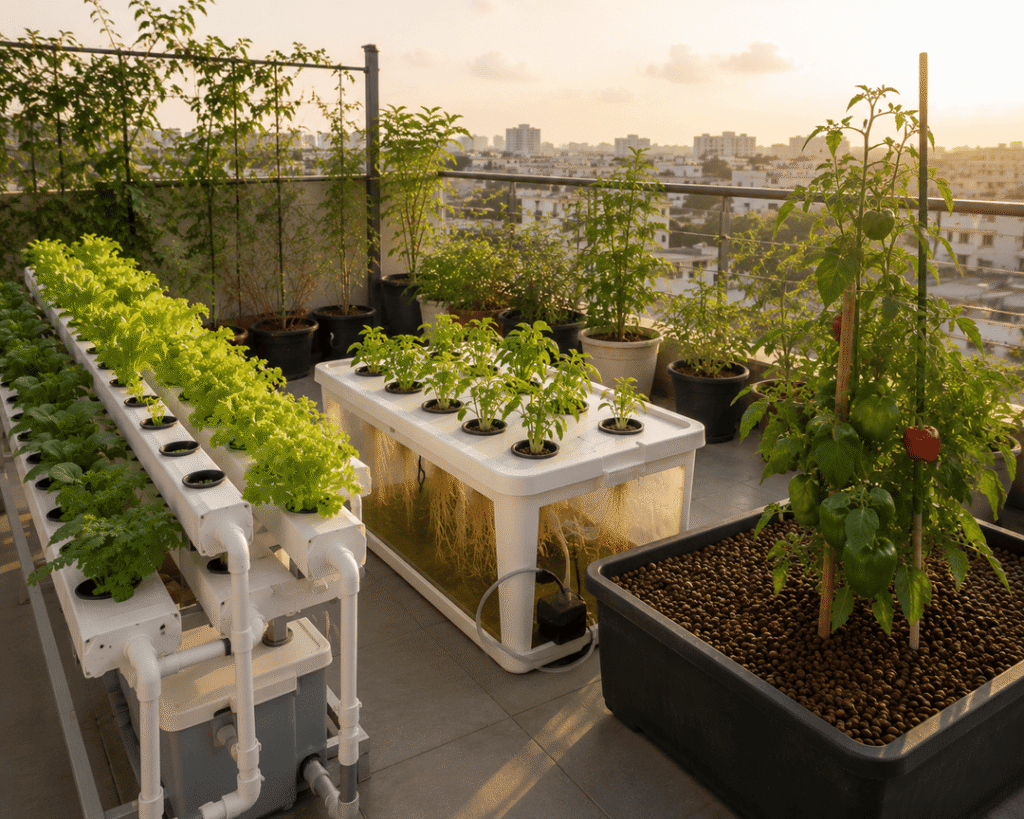
If you’re planning to install a home hydroponic system in Hyderabad, one of the first questions you’ll probably ask is:
“What can I actually grow?”
It’s a fair question. While hydroponics can support a wide variety of crops, not every vegetable performs equally well in every type of system. Some thrive in NFT channels, others grow better in Deep Water Culture (DWC), while fruiting vegetables prefer to grow beds with strong root support.
Choosing the right crop for the right hydroponic system makes all the difference. It leads to healthier plants, better yields, and a more enjoyable gardening experience.
In this guide, we’ll walk you through the best vegetables and herbs for a home hydroponic system in Hyderabad, explain which hydroponic system suits each crop, and share practical tips to help you get started.
Why Crop Selection Matters in Hydroponics
Unlike traditional soil gardening, hydroponic plants depend entirely on nutrient-rich water. This means every crop has different requirements for root space, oxygen, water flow, and structural support.
For example:
- Lettuce grows exceptionally well in NFT channels.
- Tomatoes require deeper root zones and physical support.
- Herbs like basil and mint adapt well to almost any hydroponic setup.
Starting with crops that naturally suit your system reduces maintenance and increases your chances of a successful harvest.
Choosing the Right Hydroponic System
NFT (Nutrient Film Technique)
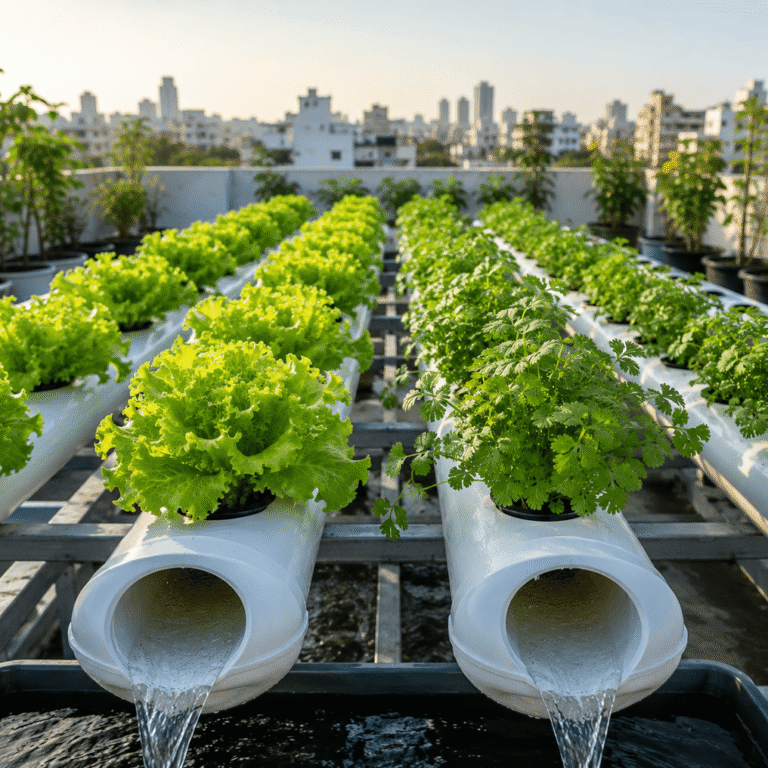
In an NFT system, a thin, continuous film of nutrient solution flows along the bottom of sloped channels or pipes. Plant roots sit partially exposed inside these channels — the lower portion touches the flowing solution while the upper portion stays in air.
That air exposure is deliberate. Roots need oxygen as much as they need nutrients. NFT gives them both simultaneously — nutrients from the flowing solution and oxygen from the open channel above.
Because the root zone stays relatively shallow and the system keeps moving, NFT works best for crops that grow quickly and don’t develop heavy root systems. Lettuce, spinach, coriander, methi, basil, mint, and pak choi are natural fits. Their roots are compact, their growth cycle is short, and they don’t need structural anchorage that a flowing channel can’t provide.
What NFT doesn’t suit: large fruiting crops like tomatoes or cucumbers. Their roots grow thick and heavy over time, which blocks channel flow and starves other plants of nutrients.
Deep Water Culture (DWC)
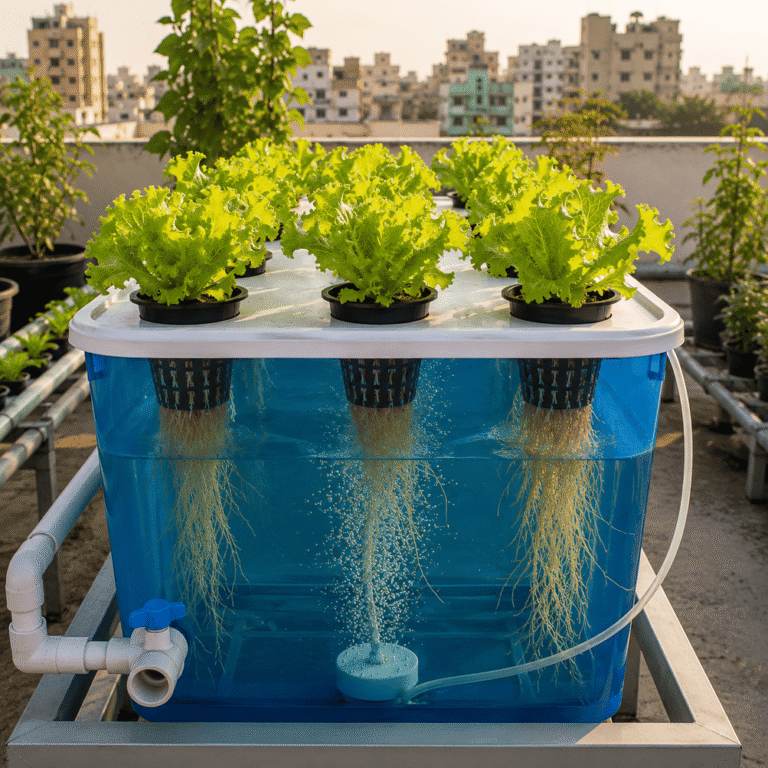
DWC takes a different approach. Plant roots are suspended directly into a reservoir of nutrient solution, submerged rather than skimmed. An air pump runs continuously at the bottom of the reservoir, pushing oxygen through the water and preventing roots from suffocating.
Because roots sit in a larger volume of solution, they have more room to develop. This makes DWC better suited to crops that need slightly more root space than NFT channels allow — kale, Swiss chard, and small-variety cherry tomatoes, for instance.
The key variable in DWC is oxygenation. If the air pump fails even briefly, roots in a submerged system can begin to suffocate within hours. Monitoring the pump is non-negotiable in a DWC setup.
DWC is also more forgiving with pH fluctuations than NFT, because the larger water volume buffers change more slowly. That gives home growers a slightly wider window to correct readings before plants are affected.
Grow Beds (Media-Based Systems)
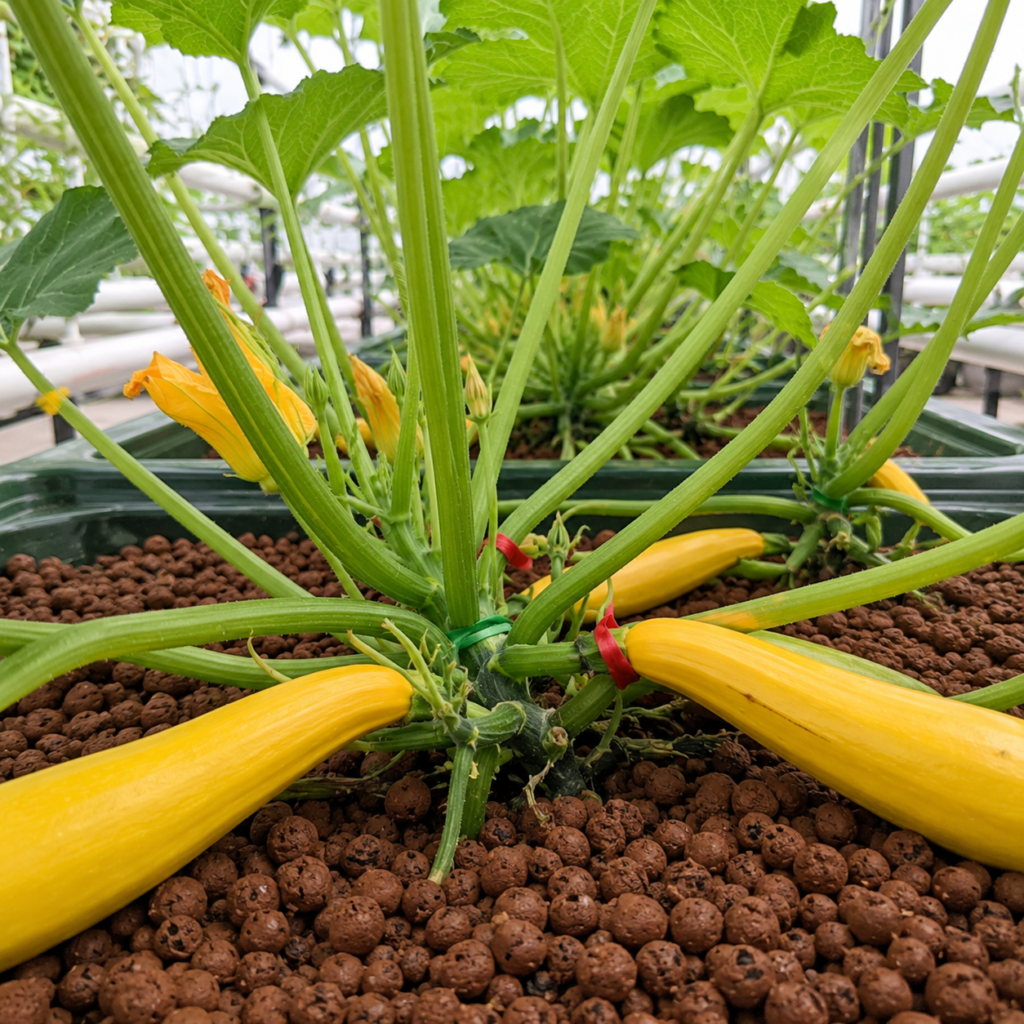
Grow beds work differently from both NFT and DWC. Instead of flowing water or submerged roots, plants grow in a physical medium of expanded clay pellets, coco chips, or similar materials that acts as a soil substitute.
Nutrient solution is periodically flooded into the bed and then drained away, following a timed flood-and-drain cycle. This alternation between wet and dry periods gives roots both the nutrients they need and the oxygen they lose in fully submerged systems.
The physical media also provides something NFT and DWC cannot: structural support. A tomato plant at full height, loaded with fruit, needs anchorage. Clay pellets or coco chips hold the root system in place in a way that flowing water simply can’t.
This makes grow beds the right choice for heavier, taller, fruit-bearing crops — tomatoes, capsicum, brinjal, cucumbers, chillies, okra, and beans.
These plants have longer growth cycles (often 90 days or more), need to be staked or trellised as they grow, and produce yields that justify the extra setup effort.
Once you’ve chosen your system and crops, the next step is setting it up correctly on your terrace. We’ve covered the full installation process from terrace assessment, layout planning, and step-by-step setup in a separate guide.
Hydroponic System Setup for Hyderabad Terraces: A Complete Guide
Best Crops for a Home Hydroponic System in Hyderabad
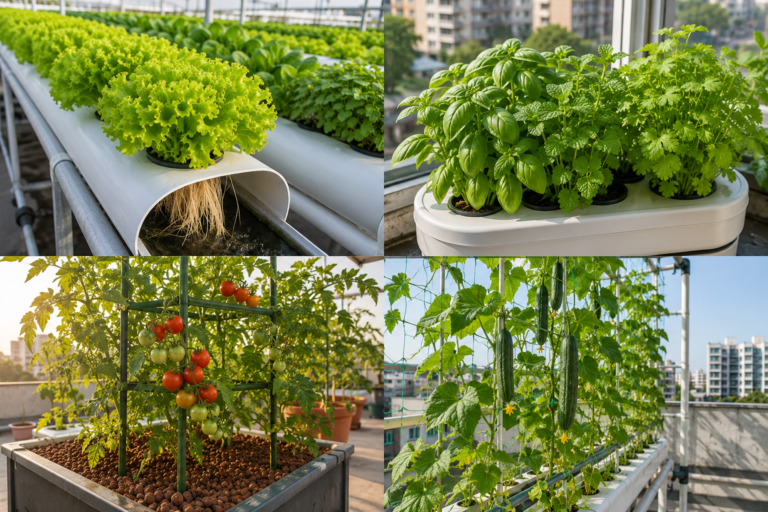
Leafy Greens: The easiest crops for beginners and are among the fastest to harvest.
- Popular options include: Lettuce, Spinach, Methi, Coriander, Pak Choi, Kale, Swiss Chard, Amaranthus
They typically mature within 25–40 days, require minimal maintenance, and provide continuous harvests.
Herbs: Hydroponics is an excellent way to grow fresh herbs year-round.
- Recommended herbs include: Basil, Mint, Coriander, Parsley, Oregano, Thyme, Rosemary
These herbs thrive in Hyderabad’s climate when grown in a well-maintained home hydroponic system.
Fruiting Vegetables: Once you’re comfortable with leafy greens, you can move to fruiting crops.
- Excellent choices include: Cherry Tomatoes, Tomatoes, Capsicum, Chilli, Brinjal, Cucumbers
These require good sunlight, strong trellising, consistent nutrient management, and regular pruning. Although they take longer to mature (70–100 days), they offer significantly higher yields.
Climbers: Climbing vegetables perform particularly well in terrace hydroponic systems with vertical support.
- Suitable crops include: Cucumbers, Beans, Bitter Gourd, Ridge Gourd
Vertical growing maximises production while using very little floor space.
Crop Compatibility for Different Hydroponic Systems
Choosing the right hydroponic system plays a major role in plant growth, maintenance, and harvest. The table below compares common vegetables and herbs based on their suitability for NFT (Nutrient Film Technique), DWC (Deep Water Culture), and Grow Bed hydroponic systems, along with their growing difficulty and average harvest time.
| Crop | NFT | DWC | Grow Bed | Difficulty | Harvest |
|---|---|---|---|---|---|
| Lettuce | ✔ | ✔ | ✔ | Easy | 25–30 days |
| Spinach | ✔ | ✔ | ✔ | Easy | 25–30 days |
| Coriander | ✔ | ✔ | ✔ | Easy | 30–40 days |
| Basil | ✔ | ✔ | ✔ | Easy | Continuous |
| Mint | ✔ | ✔ | ✔ | Easy | Continuous |
| Cherry Tomatoes | ✖ | ✔ | ✔ | Medium | 80–90 days |
| Tomato | ✖ | ✖ | ✔ | Medium | 90 days |
| Capsicum | ✖ | ✖ | ✔ | Medium | 90–110 days |
| Brinjal | ✖ | ✖ | ✔ | Medium | 90–120 days |
| Cucumber | ✖ | ✖ | ✔ | Easy | 60–70 days |
Note: Harvest duration may vary depending on climate, nutrient management, plant variety, sunlight, and overall growing conditions. For fruiting vegetables like tomatoes, capsicum, and brinjal, Grow Bed systems generally provide better root support and higher yields, while leafy greens thrive exceptionally well in NFT and DWC systems.
Tips for Better Hydroponic Harvests
A successful home hydroponic system in Hyderabad depends on more than choosing the right crops.
Keep these practices in mind:
- Monitor pH regularly (5.8–6.5 for most crops)
- Check EC levels based on crop requirements
- Maintain clean reservoirs
- Replace nutrient solution periodically
- Ensure pumps operate continuously
- Prune fruiting plants to encourage airflow
- Use trellises for tomatoes and climbers
- Harvest leafy greens regularly to promote fresh growth
Simple maintenance goes a long way in improving plant health and productivity.
Common Mistakes Beginners Make
Avoid these common errors:
- Growing large fruiting vegetables in NFT channels
- Overcrowding plants
- Ignoring pH and EC measurements
- Using poor-quality seedlings
- Inconsistent watering or pump failures
- Expecting all vegetables to grow equally well in every system
Matching the crop to the right hydroponic setup is the key to success.
Ready to Start Your Home Hydroponic Garden?
Choosing the right crops is the first step toward a productive hydroponic garden. Start with leafy greens and herbs to build confidence, then gradually expand into fruiting vegetables like tomatoes, capsicum, and cucumbers.
At Venonto, we design and install customised home hydroponic systems in Hyderabad for terraces, balconies, and rooftops. From selecting the right system to recommending the best crops for your space, our team provides complete end-to-end support.
Looking to grow fresh, pesticide-free vegetables at home? Contact Venonto today and let us help you build the right hydroponic system for your home.

At Venonto, we design, install, and maintain modern urban farms with hydroponic and terrace gardens for homes and businesses. Our customized setups use food-safe materials, smart irrigation, and low-water methods to grow healthy produce with minimal environmental impact. We’re on a mission to make fresh, home-grown food practical in every Indian city.
Let’s Grow Together
Registered Office
Venonto Private Limited.
#204, 17-98/12, Sri Sai Nivas, Kamalanagar, Dilsukhnagar, Hyderabad – 500060, Telangana, India.
Phone: +91 9841377070
Email: connect@venonto.com
CIN No: U51909TG2021PTC154670
© 2026 Venonto. All Rights Reserved.