- +91 98413 77070
- connect@venonto.com

Aquaponics and the Circular Food System: The Loop Nature Already Built
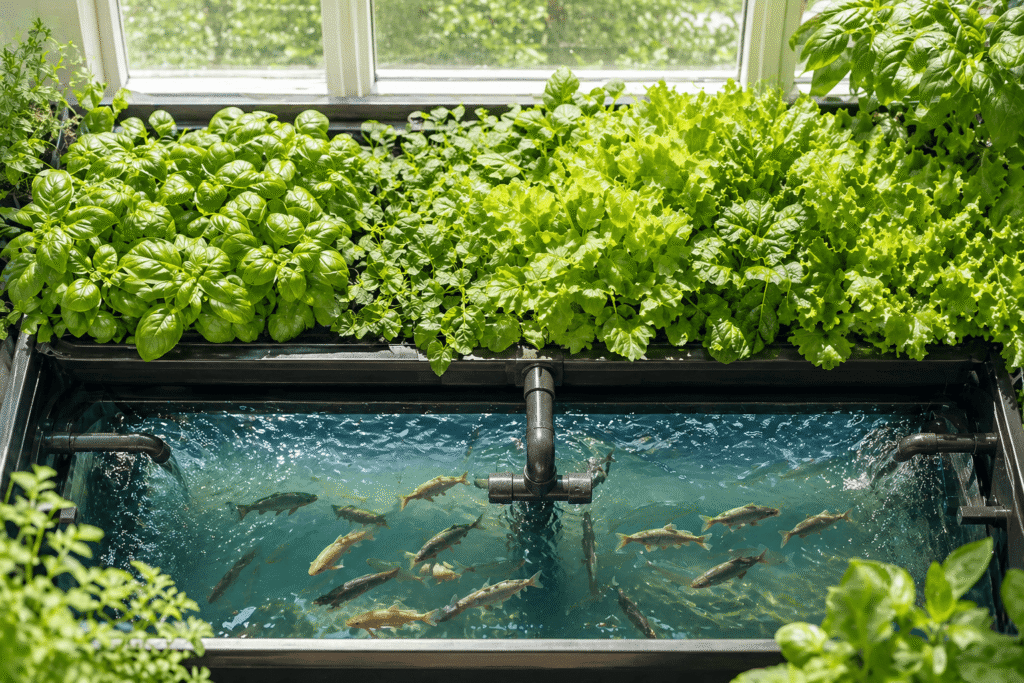
The Loop That Was Always There
The aquaponics circular food system is one of the oldest principles on earth. Most people have never heard of it. Every year, the world produces enough food to feed 10 billion people.
There are more than 8 billion of us today.
And yet, roughly one third of all food produced on earth never gets eaten. It rots in transit. It spoils in storage. It gets discarded because it arrived a day too late or looked slightly wrong under fluorescent lights.
We do not have a production problem. We have a system problem.
The Journey Nobody Sees
Think about the last vegetable you bought. It probably started its life on a farm hundreds of kilometres away. It was harvested before it was fully ready so it could survive the journey. Then it went into cold storage. Then onto a truck. Then into a warehouse. Then onto a shelf.
By the time it reached your kitchen, it had already been travelling for days. In some cases, weeks.
What happens to nutrients during that journey? They leave. Slowly, silently, with every hour that passes between harvest and consumption.
A vegetable that looks healthy on a supermarket shelf can carry a fraction of the nutritional value it had at the moment it was picked. You eat it. You feel like you are eating well. But the most valuable part of the food was already left.
This is the part of the food system that nobody shows you.
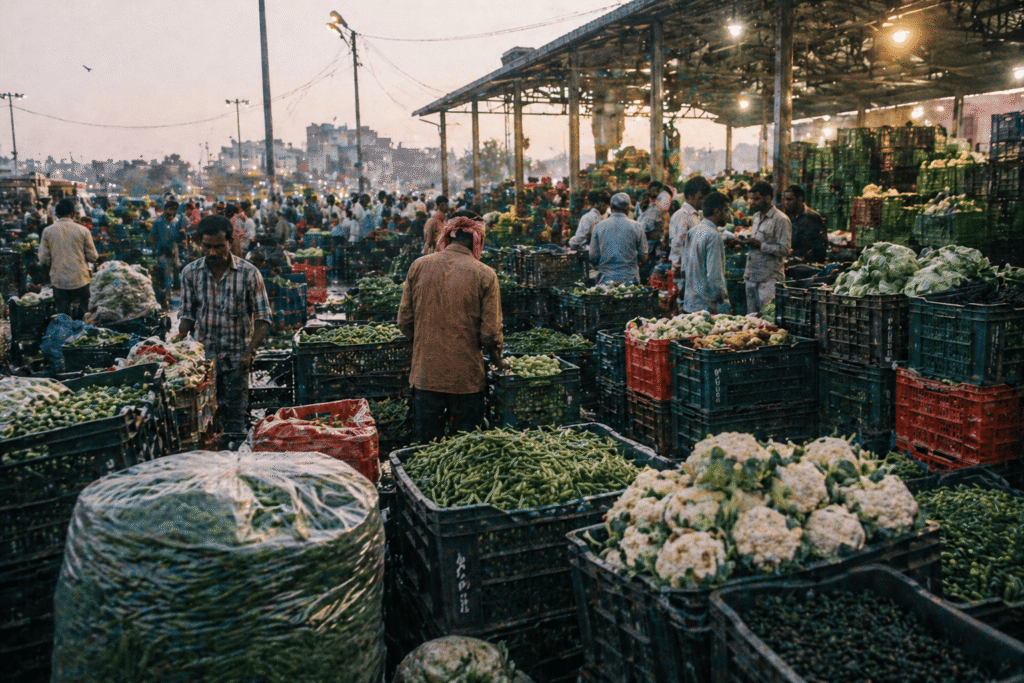
India Sits at the Centre of This Contradiction
India is the world’s second largest producer of fruits and vegetables. The country produced 214 million tonnes of vegetables in 2024 alone.
Those are extraordinary numbers. They suggest abundance.
But India also has one of the longest and most complex supply chains in food distribution. Produce moves from small farms across states, through multiple handlers, before it reaches an urban consumer. Losses along the way are significant. Nutrition loss is even harder to measure, and therefore easier to ignore.
More than 534 million people in India now live in cities and the number is rising every year. Most of them depend entirely on that supply chain. They have no direct connection to where their food is grown. They cannot see the journey. They can only see what arrives at the end of it.
The urban food system is built on distance. And distance, in food, almost always means loss.
The Aquaponics Circular Food System Nature Already Built
Here is the thing about the aquaponics circular food system. The concept sounds new. The concept sounds new. It gets discussed in policy papers and sustainability conferences. People draw diagrams with arrows going in circles and talk about closing loops.
But nature closed this loop a very long time ago.
Aquaponics is one of the oldest food production principles on earth. Fish and plants have been growing together in shared water systems for centuries.
What modern aquaponics does is make that ancient relationship precise, controlled, and productive enough to run inside a home, a terrace, or a small urban space.The system works like this.
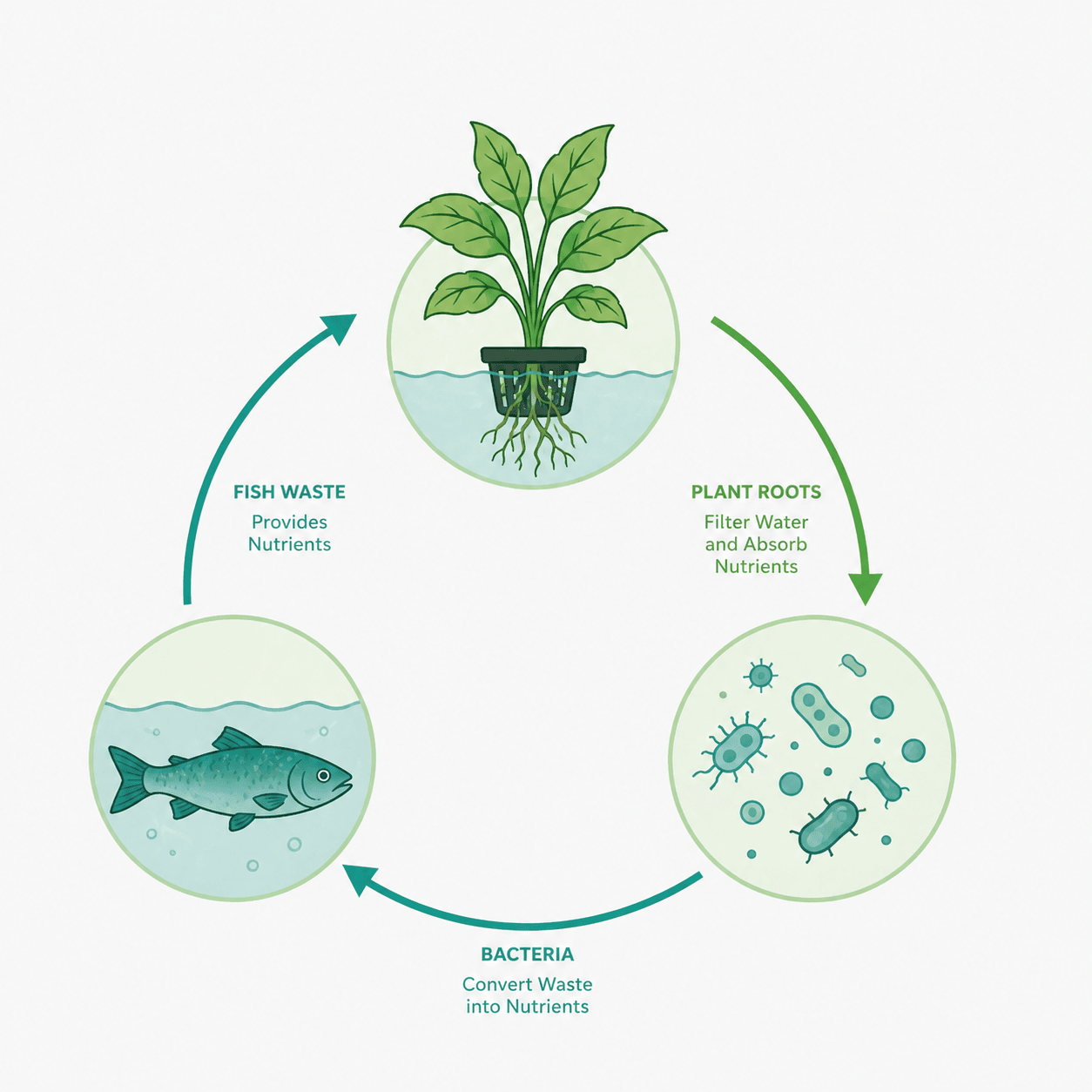
Fish produce waste. That waste breaks down into ammonia. Beneficial bacteria convert ammonia into nitrates. Plants absorb those nitrates as food. As the plants consume the nitrates, they clean the water. The clean water returns to the fish. The fish thrive. The cycle begins again.
Nothing is added beyond fish feed and water. Nothing is wasted. The fish feeds the plants. The plants clean the water for the fish. The water goes nowhere.
It is not a metaphor for circular food systems. It is a circular food system. Running continuously. In a space no larger than a corner of a room.
What This Actually Means
A conventional vegetable patch needs soil. Soil needs water. Most of that water evaporates or drains away. Then the soil needs fertilizer. Fertilizer runs off into groundwater. The cycle creates as many problems as it solves.
An aquaponics system uses roughly 90 percent less water than soil based growing. That is what makes the aquaponics circular food system fundamentally different from conventional growing, it produces no chemical runoff and requires no synthetic fertilisers. The fish and the plants create a self sustaining ecosystem. You harvest fresh greens from the top of the system and fish from the bottom of it.
The food does not travel. It grows where you consume it. The nutrients are intact because nothing is left between harvest and your plate. The loop is complete and visible.
This matters beyond individual households. It matters for how cities think about food production at scale. Urban farming through aquaponics, hydroponics, and integrated systems is not a niche lifestyle choice. It is a viable answer to a supply chain problem that grows more serious every year as cities expand and farmland retreats further from the people who need to eat.
From Invisible to Visible
Most people walk past an aquaponics unit and see a fish tank with some plants sitting on top.
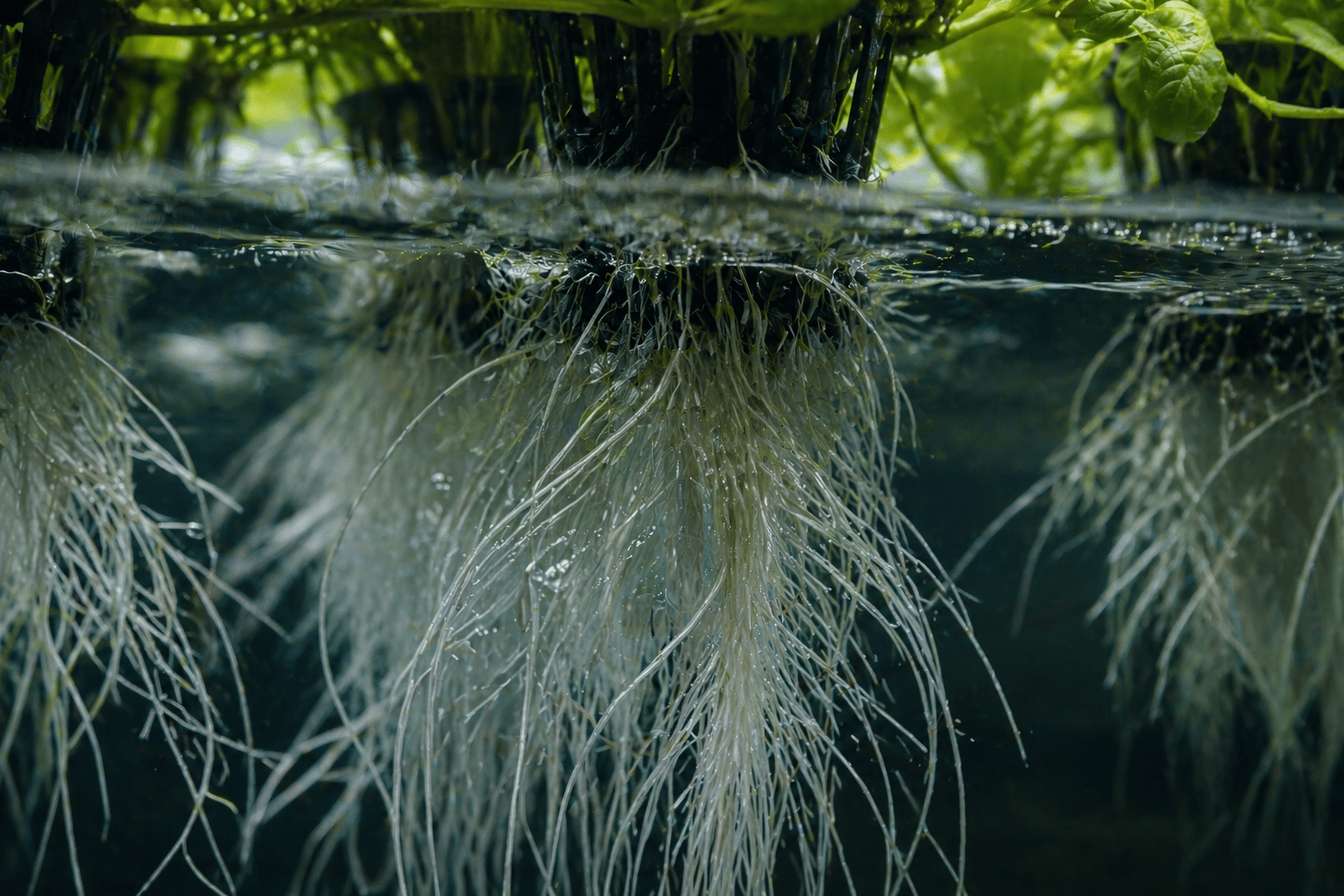
They do not see the nitrogen cycle running beneath the surface. They do not see the water being cleaned in real time. They do not see the loop closing itself, quietly, without intervention.
That is the most interesting thing about circular food systems. The mechanism is almost entirely invisible. The outputs are obvious. Fresh greens. Healthy fish. Clean water returning to the system. But the process that makes it possible runs silently, out of sight.
Making that loop visible changes how people think about food. It changes the relationship between the person eating and the system producing. It removes the distance that makes nutritional loss and food waste so easy to ignore.
At Venonto, this is the work. Not just building aquaponics units, hydroponic systems, and urban growing setups in homes and terraces across India. But making the loop visible to the people who live beside it every day.
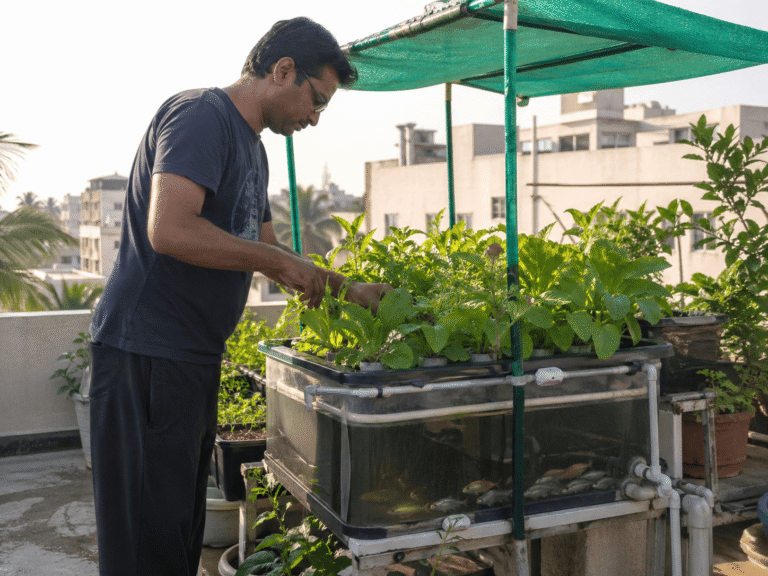
Aquaponics does not grow everything.
Carrots need soil depth. Wheat needs land. Mangoes need scale. No single system replaces an entire food chain from one corner of a balcony.
Anyone telling you otherwise is selling something. But here is what it does grow.
Fresh greens. Herbs. Fish.
The same food that travels the furthest before it reaches you. The food that loses the most nutrition somewhere between the farm and your kitchen. The same food most urban families in India buy most often, spend the most on, and receive in the worst condition.
That is not a gap in the system.
That is the system working exactly as designed. Distance is the design. You just never had to see it before.
Aquaponics does not fix everything. It fixes the part that affects you most. Every single day.
That is not a small thing.
What This All Comes Down To
The global food system loses a third of what it produces before anyone eats it. That is not a farming problem. That is a distance problem.
India grows more vegetables than almost any country. Most people eating in Indian cities have never seen the farm it came from.
Aquaponics does not try to fix the supply chain. It removes the need for one.
Fish feed plants. Plants clean water for fish. The loop runs itself. Quietly. In your home. The technology is not new. The biology is not new. What is new is choosing to use it where people actually live.
Every unit running in a home or on a terrace is not a hobby. It is the loop, closing. Right there. In front of you.
The Loop Was Always There
The food system is not broken because the technology to fix it does not exist.
The technology exists. The biology exists. The loop that connects fish, bacteria, plants, and water has existed for longer than industrial agriculture.
What is missing is visibility. What is missing is the widespread understanding that food can be grown where it is consumed, that waste in one part of a system can be the input for another part, and that the distance between a farm and a fork is a design choice, not a law of nature.
Circular food is not a future concept. It is a present reality, growing in homes and urban spaces in cities across India and around the world.
The loop was always there. We just had to learn to see it.
Venonto builds microgreens farming kits, hydroponic systems, aquaponics setups, and terrace gardens for homes and businesses across India. Every system is installed with training included. Click here and let Venonto help you.

At Venonto, we design, install, and maintain modern urban farms with hydroponic and terrace gardens for homes and businesses. Our customized setups use food-safe materials, smart irrigation, and low-water methods to grow healthy produce with minimal environmental impact. We’re on a mission to make fresh, home-grown food practical in every Indian city.
Let’s Grow Together
Registered Office
Venonto Private Limited.
#204, 17-98/12, Sri Sai Nivas, Kamalanagar, Dilsukhnagar, Hyderabad – 500060, Telangana, India.
Phone: +91 9841377070
Email: connect@venonto.com
CIN No: U51909TG2021PTC154670
© 2025 Venonto. All Rights Reserved.